North Georgia red clay is the reason half the water damage calls in Kennesaw start below the house, not above it. That clay drains so slowly that after a hard rain, water sits against your foundation for days, pressing into every seam, every crack, every window well. Add 54.6 inches of rain a year and summer humidity that never drops below 70 percent, and you get houses where a slow plumbing leak turns into a mold problem in weeks, not months. We do water damage restoration in Kennesaw, GA, and it is the only trade we practice: find the water, get it out, dry the structure to meter readings, and rebuild what cannot be saved. No franchises. No handymen with a shop-vac. No quotes over the phone. One crew that works Cobb County houses every single day.

Get Help Now
Main water shutoff, appliance valve, or the supply line behind the fixture. Do not wade into standing water to reach a breaker panel.
Water and electricity are the one combination you do not negotiate with. If the panel is dry and accessible, switch off the affected circuits.
(770) 275-6244. Tell us what you see and where. We will talk you through the next ten minutes on the phone while we roll a crew.
If you are standing in water damage this minute, here is what matters before we arrive:
Everything else, the extraction, the drying plan, the documentation, is our job. We are a water damage company in Kennesaw, GA, and emergency water damage is what we do every day.
Water damage is rarely just water. By the time we leave, most jobs have touched extraction, drying, and at least one specialty. Our crews are equipped for the full chain, from the first pump to the final coat of paint.
Standing water out first, then drying to meter readings, not to the eye. Dry to the touch and dry to the meter are two different things.
Learn moreGeorgia humidity turns water damage into mold in 48 hours. Containment, removal, and the moisture fix that keeps it from coming back.
Learn moreFrom soot and odor to firefighting water. Fire jobs are water jobs too, once the hoses are put away.
Learn moreCategory 3 water is a biohazard job: full extraction, sanitization, safe disposal. This is not a mop job.
Learn moreStorm-torn roofing, wind-driven rain, flooded window wells. Emergency tarping first, then extraction and drying.
Learn moreTrauma and contamination scenes handled discreetly, with full sanitization.
Learn moreOffices, retail, restaurants, warehouses. Mitigation scheduled around your operations to limit downtime.
Learn morePlus: biohazard cleanup, commercial restoration, burst-pipe response, emergency board-up and tarping, content pack-out, reconstruction, carpet drying, odor removal, and mold testing. All services
Restoration is local work. The water that damages a house in Kennesaw does not come from the same places, or behave the same way, as water in a desert suburb or a coastal town. Here is what we see, street after street, in 30144 and 30152.
None of this is bad luck. It is geology, climate, and housing stock. And it is exactly why a restoration company that knows Kennesaw outperforms one that just covers it.
We answer, and we ask four questions: where is the water, is it still coming, is there power in the wet area, and is anyone hurt. You get plain instructions for the next ten minutes. No hold music, no call center.
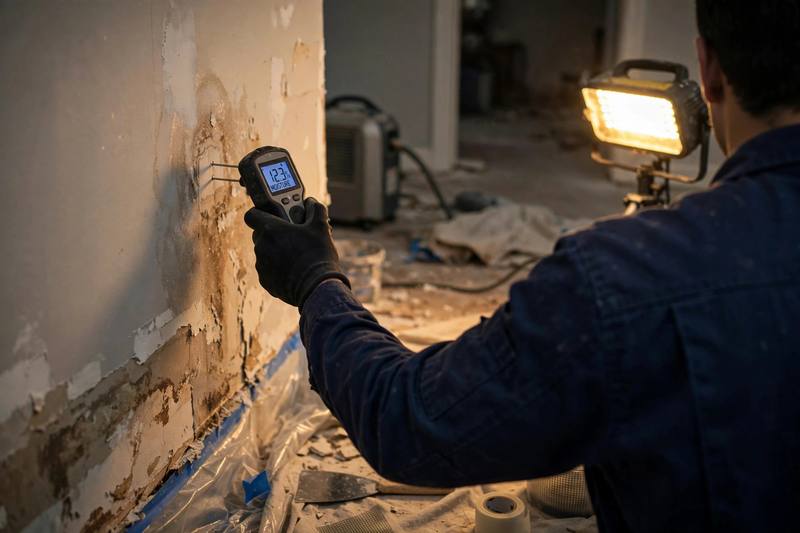
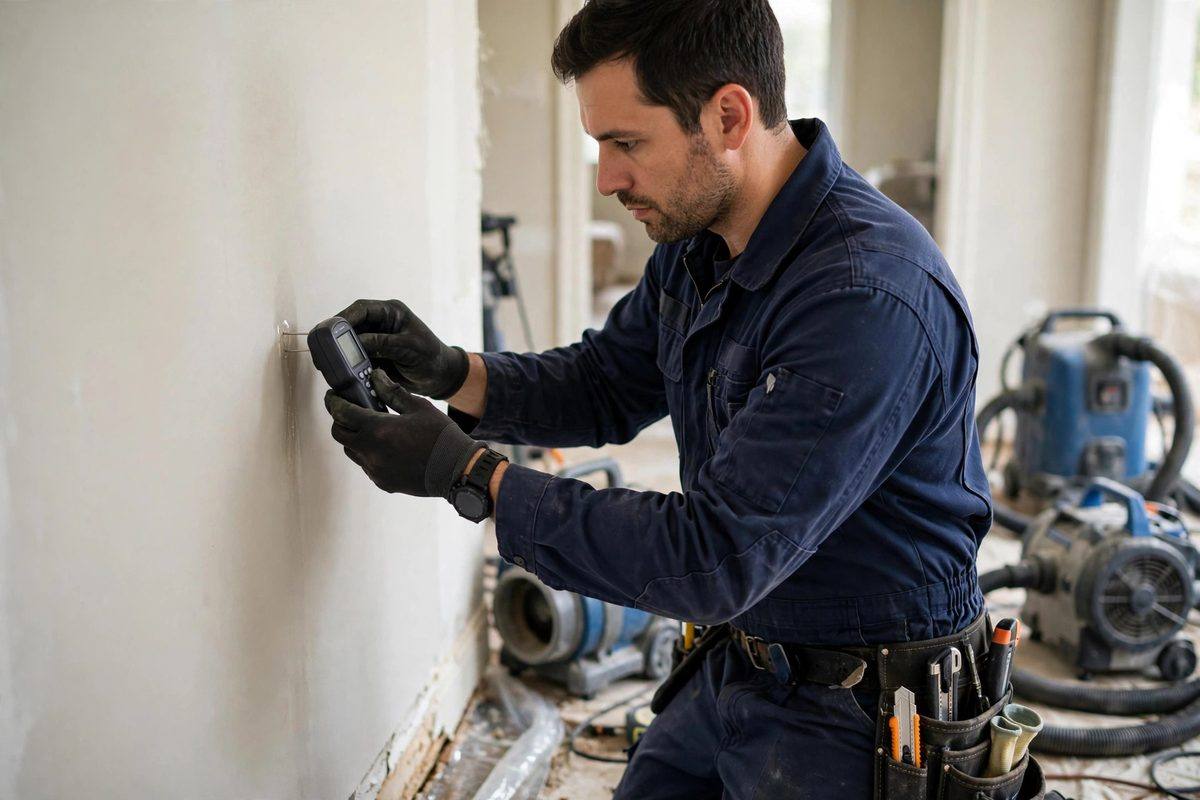
Our crew arrives with moisture meters, not just pumps. Before we move a gallon, we map the damage: which walls are wet, how far the water traveled inside them, what category of water we are dealing with. This survey decides everything that follows.
Standing water comes out first, with commercial extraction equipment. The source gets stopped or contained. Contents that can be saved get moved to dry ground and inventoried.
Based on the moisture map, we place drying equipment and set the verification schedule. You get a written scope: what we will do, in what order, and what we will measure before we call it done.

Anyone can promise quality. We put our operating standards where you can read them before you ever call.
Moisture meters on every job, before and after. Drying ends when instruments say dry, not when the carpet feels dry to your hand. This is the standard everything else hangs on. Take a common situation: the carpet feels dry on day two, but a meter in the subfloor shows twice the safe moisture level. Two more days of drying on that reading is what keeps mold out of that floor. Feeling is not a measurement, and we do not bill on feelings.
Photos, meter readings, and scope notes on every visit. If your insurance adjuster needs evidence, you hand them our file. We have watched too many claims stall for lack of documentation, so we build the file as we work. Every visit adds a dated moisture map: which walls we probed, what each probe read, and what changed since the day before. When the adjuster asks why a wall stayed on the drying plan, the answer is a number on a page, not an opinion.
The crew that extracts your water is the crew that rebuilds your walls. No handoffs between a mitigation company and a contractor who have never met. When something is our fault, there is exactly one phone number to call. The lead tech who walks your home on day one is the same person who does the final walkthrough with you, and he can explain every line of the scope because he was there for all of it.
These are not slogans. They are the checklist our crews work from, and we will show it to you on site.
Here is something most homeowners never get told: drywall can feel dry to your touch while the core is still saturated. Wood framing can look fine while holding twice its normal moisture. Water hides, and hidden water grows mold.
This is why we dry to meter readings, not to appearances. A moisture meter does not care what the surface looks like. It reports the moisture content inside the material, and we keep drying equipment running until those numbers return to the dry standard for that material in this climate.
If another contractor tells you a wall is dry because it looks dry, ask to see the meter reading. Then call us.

Our crews dispatch from Kennesaw, which puts us minutes from most of northwest metro Atlanta. These are the communities we serve every week:

It depends on the category of water, the square footage affected, and how far moisture traveled inside walls and flooring. A clean-water extraction in one room and a Category 3 sewage backup across a finished basement are different jobs at different prices. We scope on site and give you a written number before work starts. What we will not do is quote blind over the phone.
Usually yes for sudden events: burst pipes, appliance failures, storm intrusion. Usually no for long-term leaks or maintenance issues. The gray area is where documentation wins claims, which is why we photograph and meter-read everything. We work with your adjuster, but we work for you.
Extraction takes hours. Structural drying takes 3 to 5 days for most residential jobs, longer for saturated framing or in humid months. Anyone who promises "dry by tomorrow" without meter readings is guessing.
For a small clean-water spill caught immediately, maybe. For anything that soaked into walls, flooring, or subfloor, no. Household fans move humid Georgia air around without dehumidification, and you cannot verify dryness without a meter. DIY drying is the most common reason we get called back for mold jobs.
On wet organic materials, mold can begin within 48 hours. In Kennesaw's summer humidity, assume the faster end of that range. This is why we build mold prevention into every water job instead of treating it as a separate upsell.
Yes. We document to adjuster standards, provide the photos and readings they ask for, and communicate directly with them. You approve everything; we handle the paperwork friction.
Kennesaw is home base (30144, 30152). We run weekly calls in Acworth, Marietta, Woodstock, Powder Springs, Smyrna, and Dallas, GA, and we will travel further across the Atlanta metro when the job warrants it.
Water does not keep office hours, so neither do we for emergencies. Call (770) 275-6244 any time. If it is a true emergency, we roll. If it can wait until morning, we will tell you that honestly and schedule the assessment.
Tell us what happened. We will call back shortly to schedule a look.